091-5813939 | 091-3069393 | +92 316 0789789 | +92 335 8789789 Mon-Fri: 8:00 AM - 10:00 PM
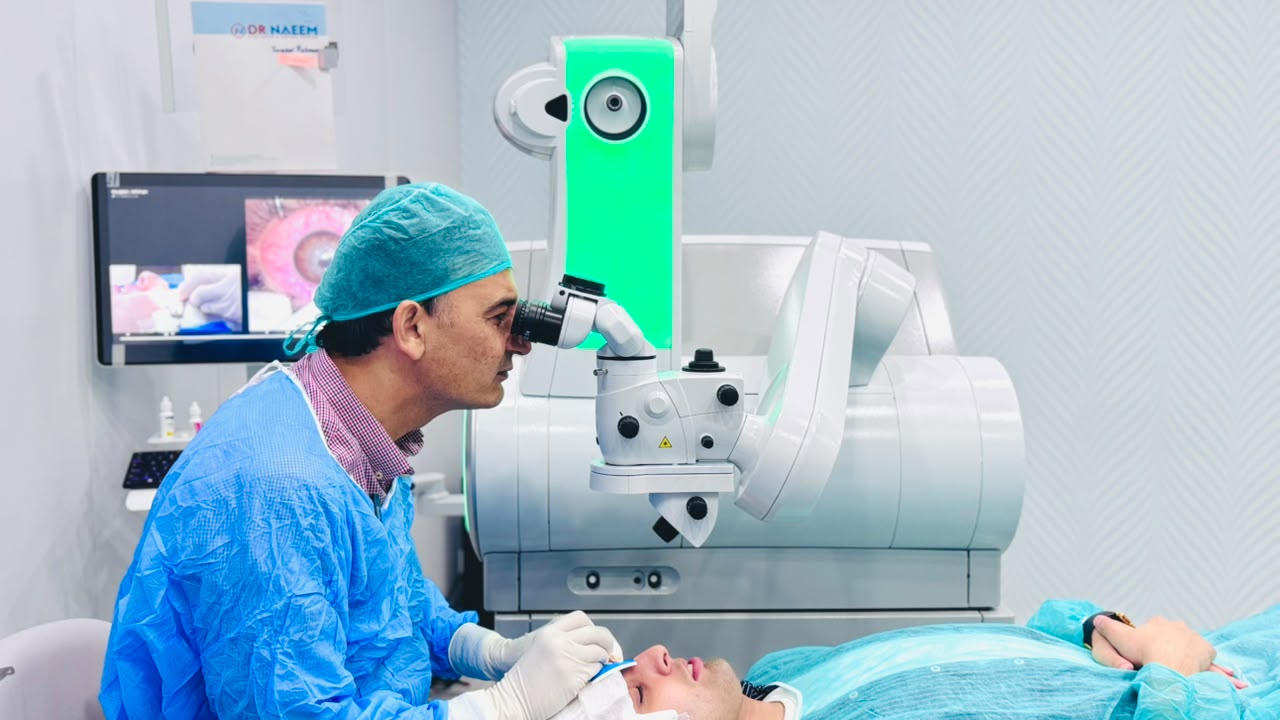
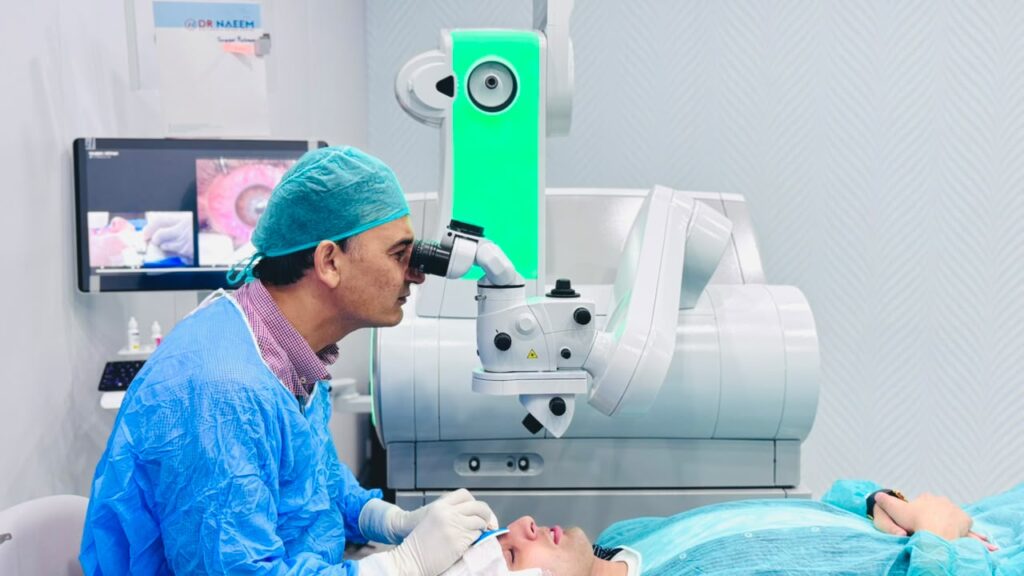
If you’ve spent years reaching for your glasses first thing every morning, or you’re tired of relying on contact lenses, you may have come across SMILE Pro while researching laser vision correction. SMILE Pro is an advanced, flapless laser vision correction procedure that uses the ZEISS VisuMax 800 femtosecond laser to create and remove a tiny piece of corneal tissue called a lenticule.
This guide explains what SMILE Pro is, how it works, what it can treat, how it differs from LASIK and earlier SMILE procedures, what recovery may be like, who may be suitable, and what patients should know before considering treatment.
Medically reviewed by: Prof. Dr. Naeem Khattak, Ophthalmologist & Eye Surgeon
Last medically reviewed: August 2026
SMILE Pro at a Glance
| Feature | Details |
|---|---|
| Procedure | Small Incision Lenticule Extraction (SMILE) |
| Technology | ZEISS VisuMax 800 femtosecond laser |
| Main uses | Myopia and astigmatism in suitable patients |
| Corneal flap | No |
| Technique | A lenticule is created inside the cornea and removed through a small incision |
| Eligibility | Determined through a comprehensive eye examination and corneal assessment |
How Does SMILE Pro Work?
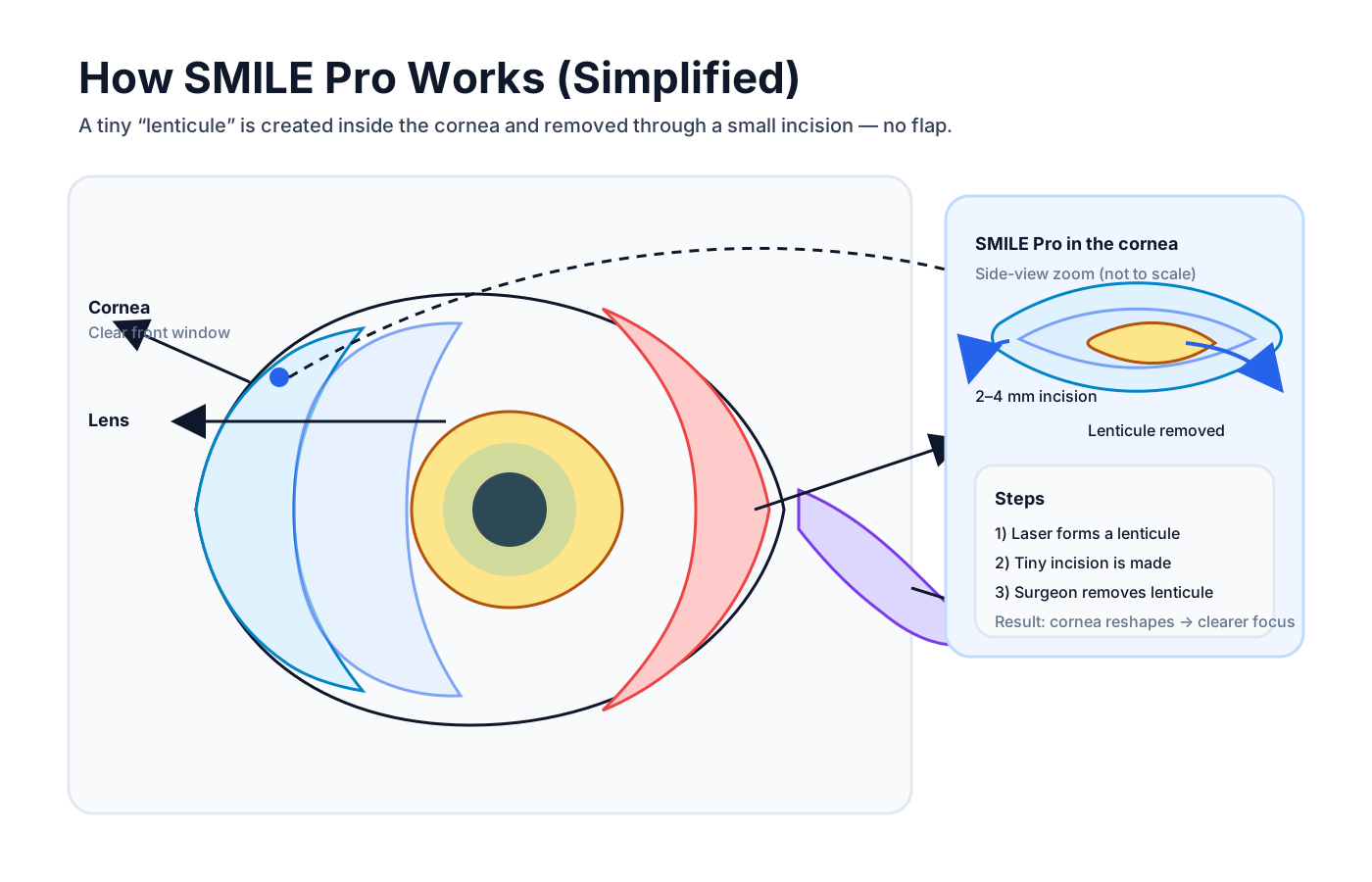
SMILE Pro uses a femtosecond laser to create a thin, lens-shaped piece of tissue called a lenticule inside the cornea. The surgeon then removes the lenticule through a small corneal incision. Removing the lenticule changes the shape of the cornea so that incoming light can focus more appropriately on the retina
.
The procedure in 3 simple steps
- 1. The laser creates the lenticule: The VisuMax 800 creates the lenticule within the corneal tissue according to the patient’s treatment plan.
- 2. A small incision provides access: The surgeon accesses the lenticule through a small incision rather than creating a LASIK-style corneal flap.
- 3. The lenticule is removed: Removing the lenticule changes the corneal shape and corrects the targeted refractive error.
What Does SMILE Pro Stand For?
SMILE Pro stands for Small Incision Lenticule Extraction Pro. It is an advanced generation of the SMILE procedure performed using the ZEISS VisuMax 800 femtosecond laser platform.
Unlike LASIK, SMILE Pro does not require the creation of a large corneal flap. Instead, the femtosecond laser creates a lenticule within the cornea, which is removed through a small incision. ZEISS states that the VisuMax 800 can create a lenticule in less than 10 seconds and includes computer-assisted centration and cyclotorsion features designed to support the surgical workflow. See ZEISS VisuMax 800 technical information.
The laser’s lenticule-creation time is only one part of the procedure. The overall treatment also includes preparation, eye docking, lenticule extraction, and postoperative checks.
What Does SMILE Pro Treat?
SMILE Pro is designed for suitable patients with common refractive errors, particularly:
- Myopia (nearsightedness) — difficulty seeing distant objects clearly.
- Astigmatism — blurred or distorted vision caused by an irregular optical shape of the eye, often involving the cornea.
Eligibility depends on factors such as prescription, stability, corneal shape and thickness, and overall eye health. The exact treatment range depends on the device’s approved indication and the surgeon’s clinical assessment. For example, the current U.S. FDA labeling for the VisuMax system includes SMILE for myopia with or without astigmatism in specified prescription ranges and requires stable refraction for the indicated patient population. View the FDA device indication.
SMILE is not a general treatment for every type of refractive error. Hyperopia (farsightedness) and presbyopia require different treatment considerations, so your surgeon must determine which option is appropriate for your eyes.
How Is SMILE Pro Different From LASIK?
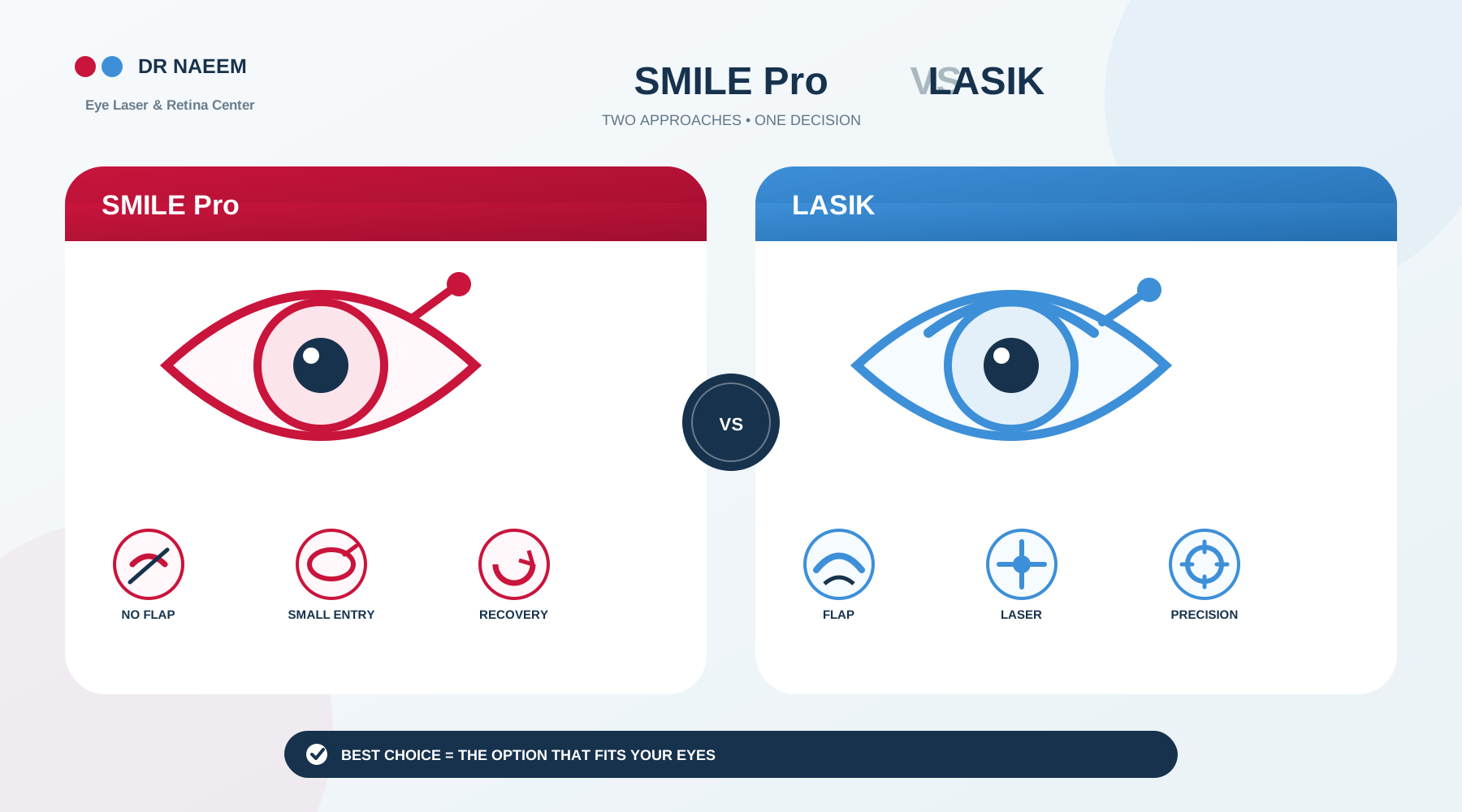
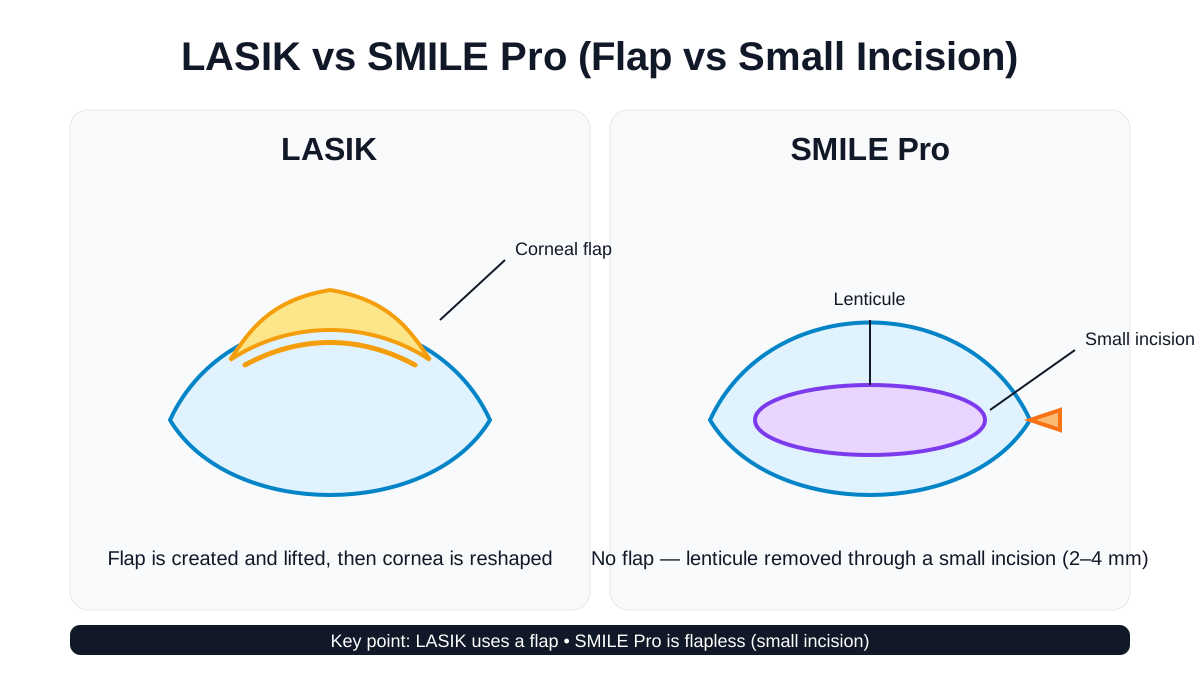
LASIK and SMILE Pro can both correct certain refractive errors, but they use different surgical techniques. Neither procedure is universally better; the appropriate option depends on your prescription, corneal measurements, eye health, and individual circumstances.
| Feature | LASIK | SMILE Pro |
|---|---|---|
| Corneal flap | Yes a corneal flap is created and lifted | No no LASIK-style flap is created |
| Main technique | Flap creation followed by corneal reshaping with an excimer laser | Lenticule creation and removal through a small incision |
| Laser systems | Typically uses a femtosecond laser for the flap and an excimer laser for reshaping | Uses a femtosecond laser to create the lenticule and incision |
| Corneal nerves | Can have a greater early impact on corneal nerves | Studies generally show less early corneal nerve disruption than FS-LASIK |
| Dry-eye considerations | Dry-eye symptoms can occur after surgery | Some studies report fewer or less pronounced early dry-eye effects than LASIK |
| Recovery | Often rapid, but individual recovery varies | Often rapid, but individual recovery varies |
Research comparing SMILE with femtosecond LASIK has found less early impact on corneal nerves and, in several studies, better dry-eye-related outcomes after SMILE. However, individual outcomes vary, and this does not mean SMILE Pro is automatically the better choice for every patient. See a systematic review of corneal nerve outcomes.
What Makes SMILE Pro Different From the Original SMILE?
SMILE Pro is performed using the newer ZEISS VisuMax 800 platform, whereas earlier SMILE procedures were performed on earlier VisuMax systems. ZEISS reports that the VisuMax 800 uses a higher laser pulse repetition rate and can create a lenticule in less than 10 seconds. It also provides computer-assisted centration and cyclotorsion features intended to support the surgical workflow.
These technology and workflow differences do not by themselves determine whether SMILE Pro is suitable for a particular patient. Your surgeon still needs to assess your eyes, prescription, corneal measurements, and overall eye health.
Is SMILE Pro Safe?
SMILE Pro is a surgical procedure, so it carries potential risks and side effects. A responsible discussion should include both the benefits and the limitations rather than presenting laser vision correction as risk-free.
Common temporary effects
- Temporary blurred or fluctuating vision
- Mild irritation or a gritty sensation
- Light sensitivity
- Dry-eye symptoms
- Glare, halos, or other visual disturbances during the recovery period
Less common or serious complications
Complications can include infection, inflammation, residual or recurrent refractive error, corneal problems, visual disturbances, or other issues that may require additional treatment. The likelihood and severity of complications depend on patient selection, surgical technique, healing, and other individual factors.
Published studies generally report good visual outcomes for appropriately selected SMILE patients, but no laser vision correction procedure can guarantee perfect vision or eliminate the possibility of complications. Your surgeon should explain the risks that are specifically relevant to your eyes before treatment.
Important: suitability and risk can only be assessed properly through a comprehensive eye examination, including appropriate corneal measurements and other pre-operative testing.
Is SMILE Pro Painful?
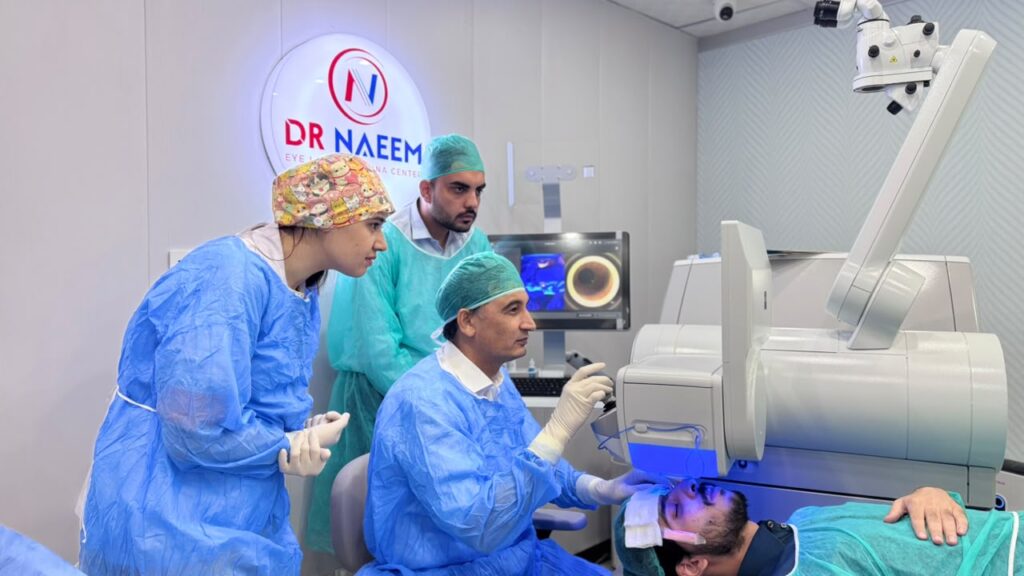
Numbing eye drops are used during the procedure, so patients generally do not feel cutting or burning sensations. Many patients describe pressure or a brief sensation while the eye is stabilized during treatment. Mild discomfort, light sensitivity, watering, or a gritty feeling can occur after surgery as the eye begins to recover.
Because individual experiences vary, your surgeon should explain what you can expect during and after your specific procedure.
What Does SMILE Pro Recovery Look Like?
Recovery after SMILE Pro is often relatively quick, but the exact timeline varies from patient to patient. Many patients notice meaningful improvement in vision within the first few days, while visual quality can continue to stabilize over the following weeks.
Immediately after surgery
- Vision may initially be blurry or fluctuate.
- Mild irritation, watering, or light sensitivity may occur.
- Follow the surgeon’s instructions regarding eye drops and eye protection.
First few days
- Vision often continues to improve.
- Many patients can return to desk-based work relatively quickly if their surgeon confirms that recovery is progressing normally.
- Do not drive until your surgeon confirms that your vision meets the required standard for safe driving.
Following weeks
Visual quality can continue to stabilize after the initial improvement. Follow-up appointments are important so your surgeon can monitor healing and address any symptoms or concerns.
Related guide: SMILE Pro Recovery Timeline link this text to your dedicated recovery article once it is published.
Who Is a Good Candidate for SMILE Pro?
Good candidates are determined through an eye examination rather than age or prescription alone. Factors commonly considered include:
- Age: adults who meet the applicable age and regulatory requirements.
- Prescription stability: a stable prescription is generally required before refractive surgery.
- Correctable prescription: the myopia and/or astigmatism must fall within the appropriate treatment range for the patient’s device, anatomy, and clinical plan.
- Corneal health: corneal shape, thickness, and structural health must be suitable for laser vision correction.
- Overall eye health: conditions affecting the cornea, ocular surface, retina, or other parts of the eye may affect eligibility.
- Pregnancy and breastfeeding: hormonal and prescription changes can affect refractive stability, so timing should be discussed with your ophthalmologist.
The final decision should be based on a comprehensive pre-surgery evaluation. If you are considering SMILE Pro, your assessment may include refraction, corneal topography/tomography, corneal thickness measurements, and other tests your surgeon considers appropriate.
Not sure whether you are a candidate? Book a SMILE Pro consultation for an individual assessment.
SMILE Pro in Peshawar, Pakistan
SMILE Pro is available at DR NAEEM Eye Laser & Retina Center in Peshawar, where the procedure is performed using the ZEISS VisuMax 800 platform for suitable patients. The center is located opposite HMC main gate in Phase 4 Hayatabad, Peshawar, and serves patients from Khyber Pakhtunkhwa, other parts of Pakistan, and overseas.
Before treatment, patients should undergo a comprehensive eye assessment to determine whether SMILE Pro is appropriate for their prescription, corneal measurements, and overall eye health. The consultation is also the right time to discuss alternative procedures such as LASIK or other vision-correction options when appropriate.
Book a SMILE Pro consultation in Peshawar →
How Much Does SMILE Pro Cost in Pakistan?
The cost of SMILE Pro in Pakistan can vary because treatment plans and diagnostic requirements differ between patients and clinics. A personalized quote is usually provided after the eye assessment.
What can affect the cost?
- Pre-operative diagnostic testing
- The patient’s prescription and treatment requirements
- Corneal topography/tomography and other measurements
- The technology and treatment package provided by the clinic
- Post-operative reviews and medications
When comparing prices, ask what is included in the package rather than comparing the headline price alone.
Frequently Asked Questions
Is SMILE Pro the same as LASIK?
No. Both procedures can correct certain refractive errors, but they use different techniques. LASIK creates a corneal flap and reshapes the cornea with an excimer laser, while SMILE Pro creates and removes a lenticule through a small incision without creating a LASIK-style flap.
Will I need glasses again after SMILE Pro?
Many patients achieve substantial freedom from glasses or contact lenses for distance vision after successful treatment. However, laser vision correction does not stop natural age-related changes. Presbyopia can develop later in life and may eventually require reading correction.
Is SMILE Pro available in Pakistan?
Yes. SMILE Pro using the ZEISS VisuMax 800 is available in Pakistan, including at DR NAEEM Eye Laser & Retina Center in Peshawar for suitable patients.
How do I know if I am eligible?
The reliable way to determine eligibility is through a comprehensive in-person eye evaluation. Your prescription, corneal shape and thickness, eye health, and other clinical factors need to be assessed before treatment is recommended.
How long does SMILE Pro surgery take?
The laser’s lenticule-creation stage can take less than 10 seconds on the ZEISS VisuMax 800, depending on treatment parameters. The complete appointment takes longer because it includes preparation, docking, lenticule extraction, and postoperative checks.
How soon can I return to work after SMILE Pro?
Many patients can return to desk-based work quickly, sometimes within a day or a few days, but the timing depends on individual recovery and the type of work. Your surgeon should confirm when it is safe for you to resume work, driving, exercise, and other activities.
Can SMILE Pro correct astigmatism?
Yes. SMILE is designed to correct myopia with or without astigmatism in suitable patients. The exact range that can be treated depends on the applicable device indication, treatment plan, and the patient’s eye measurements.
What tests are needed before SMILE Pro?
Pre-operative testing commonly includes a detailed refraction and assessment of the cornea, including measurements of corneal shape and thickness. Your surgeon may request additional tests depending on your medical and eye history.
Medical Sources & References
The following sources were used to verify key medical and technology statements in this guide:
- ZEISS — VISUMAX 800 and SMILE pro technology
- ZEISS — VISUMAX 800 technical specifications
- U.S. FDA — VisuMax SMILE indication and labeling
- PubMed — Systematic review of SMILE and FS-LASIK corneal nerve outcomes
- PubMed — Systematic review and meta-analysis of dry-eye outcomes after SMILE/KLEx versus FS-LASIK
Medical Disclaimer
This article is provided for educational and informational purposes only. It does not replace a comprehensive eye examination, diagnosis, or individualized medical advice from a qualified ophthalmologist. Suitability for SMILE Pro varies from person to person, and no online article can determine whether the procedure is appropriate for your eyes.
For more information about the limitations of online medical information, please read the DR NAEEM medical information and website terms.